From what mankind remembers, there are forms of religion that have directed spirituality of human beings during the course of his existence; even today the world is dotted with a large number of religions that interpret God, or Gods, in various ways and this, in general, gives spiritual comfort to many people but faith is not everything, because every religion is inevitably also a system that generates politics and that affects society. Politics is, in fact also in the case of religions, an unavoidable matter, as strictly speaking, every decision that is not exclusively individual is political and therefore religious institutions, voluntarily or involuntarily, are "political". But well too often this political behaviour results in an excess, since their primary purpose is obviously religion, and therefore they should have greater awareness then what they had in recent times, as some religions overlap in areas that aren’t of their competence. But here we want to emphasize another aspect of religions, that is the social and moral one that they exercise towards society. One's own individual religion is a question of faith, but the fact that there are more religions has always led to political frictions and conflict, because this multiplicity questions those that are given as absolute truths, which in turn are often also questioned by the study of historical events, so what remains unchanged is always the same factor: faith. Therefore, having ascertained that if one believes that a religion is the true one and that the consequence is inevitably that the others are not true; the results is that from that perspective superstition "becomes" the basic element of the rest of the spiritual world. If this is not so, then these are interpretations, even if it is difficult to make parallels between religions that preach good and beautiful things and others that until relatively recently, made human sacrifices and quartered here and there. So faith is faith but what is well understood, despite the inconsistencies between the various religions, is that religious institutions also have a very specific social function, although this element is not generally clearly codified. From what has been handed down by historians since ancient times, we know that there always was a cultured class that gave society its leaders, priests and administrators and the people, which was generally ignorant. If there is one thing that is very difficult, it is to teach the ignorant, who often are also stubborn, so it is assumed that in ancient times the priests had to resort to simplifications to explain to the masses the reasons for a religion and this inevitably decreased to the propagation of superstitions. The superstitions were certainly already inherent in primitive humanity, as people weren’t able to interpret natural phenomena, if not in a limited way, so they tended to give a mechanistic or imaginative answer to those events and, when these answers were consolidated, the superstitions were born. Today science has helped us to understand inexplicable events, and the religions of primitive men seem to evolved man only stories for children or jokes. But even those ancient beliefs had an important function: to defeat anarchy through the imposition of moral rules that drew their strength from the fear of an earthly or otherworldly punishment. A primitive, rude and ignorant human being, just to give an example, would not have been able to understand a script like this, as he would not have been able to understand that if he went around killing a category of his fellow men, this would have had a bad impact to the progress of society; therefore the primitive religions began to disclose moral and civil rules for what was considered the good of society and, as anticipated, the simplest way to enforce these rules was superstition (example: if you do so or so, God blows you ) or direct punishment. Human societies have always been in constant evolution and, consequently, religions have had to adapt to the times and where this does not happen a decompensation is formed when two societies are compared on their different religions, when one of these remains crystallized over time. So religions have, or should have, a moral effect on society, while taking into account the fact that there are no moral phenomena but only moral interpretations of the phenomena. However, when a religious institution, such as the Catholic Church of recent times, "preaches well but scratches badly", it is obvious that the effect on society can only be negative. If, for example, a high presence of paedophiles is highlighted among the priests of a religious institution, it becomes increasingly clear that these dress the cassock, probably because they know that the institution offers their omertà even when they commit serious sins, a strong materialism in that system, criminal in this case, in open contrast to spirituality. It can very well be said that certain institutions have in fact become the refuge of criminals, like paedophiles, thanks to a poor interpretation of religious doctrine by those same institutions and the effect can only be devastating for the whole society (even the atheists who grow up in a Christian society, for example, will have a sense of Christian morality). What about the fact that in some countries who commits theft in a place of worship receives a double sentence? the concept is shared, because one goes to touch the sacred but should be seen bilaterally, so when the paedophile priest violates the innocence of a minor, using the suggestion that the concept of sacredness can have on an infantile mind, he should be punished much more severely than a "normal" paedophile, because he violates the sacredness twice! Today, human societies are disillusioned and only where ignorance and disinformation reign, the various religious institutions are not challenged for their lack of righteousness, morals and the enormous accumulation of wealth, and the latter is another serious one; An element in contrast to what is generally preached. In fact, one wonders how a religious institution can beg charity even from starving ones, when it holds assets that could solve the problem of hunger for centuries? This is the case of the Catholic Church. Hypocrisy must also have an end, like the omertà, because all this has a devastating effect on society and today more than ever it clear by the enormous moral decadence that afflicts human society. Justice must always be earthly first, then everyone can have faith in what he believes but stays an individual choice, not an absolute one.
Matteo Cornelius Sullivan



Ultimi Articoli

Ticino, vendere casa senza agenzia non basta — la comunicazione immobiliare fà la differenza

Vendere o comprare casa in Ticino senza agenzie: la nuova linea di comunicazione immobiliare

Medeglia — Un terreno edificabile in quota tra natura, vallata e futuro abitativo

Topo Gigio torna a teatro: al Lirico di Milano il musical che unisce nostalgia televisiva e spettacolo per famiglie

Dal cinema al palcoscenico: “Fantozzi. Una tragedia” arriva al Teatro Carcano di Milano

Festa della Donna a Palazzo Lombardia — Belvedere aperto senza prenotazione e piazza in festa

Frankenstein Junior – Il Musical al Teatro Nazionale di Milano: dal 6 all’8 maggio 2026 torna il cult di Mel Brooks
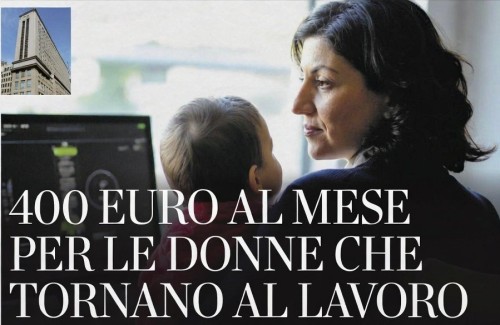
Lombardia per le donne — 400 euro al mese per sostenere lavoro e carichi di cura

“Volevo essere io”: Valeria Graci in scena al Teatro Manzoni di Milano